About this essay
Theodore Roosevelt gave this speech at the Sorbonne in Paris on April 23, 1910, about a year after he left the White House. The whole thing is called “Citizenship in a Republic,” and it runs close to 9,000 words. The part people actually quote, “the man in the arena,” is one paragraph in the middle. (It’s also where Brené Brown got the title for Daring Greatly.)
Here’s that paragraph, plus the one right before it, where Roosevelt goes after the cynic who criticizes “the way others do what they themselves dare not even attempt.”
If you want to read the full speech, you can view it at Project Gutenberg.
Text from Theodore Roosevelt, African and European Addresses (1910), via Project Gutenberg (eBook #13930), public domain in the US.
From “Citizenship in a Republic,” by Theodore Roosevelt (1910)
Let the man of learning, the man of lettered leisure, beware of that queer and cheap temptation to pose to himself and to others as the cynic, as the man who has outgrown emotions and beliefs, the man to whom good and evil are as one. The poorest way to face life is to face it with a sneer. There are many men who feel a kind of twisted pride in cynicism; there are many who confine themselves to criticism of the way others do what they themselves dare not even attempt. There is no more unhealthy being, no man less worthy of respect, than he who either really holds, or feigns to hold, an attitude of sneering disbelief towards all that is great and lofty, whether in achievement or in that noble effort which, even if it fails, comes second to achievement. A cynical habit of thought and speech, a readiness to criticise work which the critic himself never tries to perform, an intellectual aloofness which will not accept contact with life’s realities—all these are marks, not, as the possessor would fain think, of superiority, but of weakness. They mark the men unfit to bear their part manfully in the stern strife of living, who seek, in the affectation of contempt for the achievements of others, to hide from others and from themselves their own weakness. The role is easy; there is none easier, save only the role of the man who sneers alike at both criticism and performance.
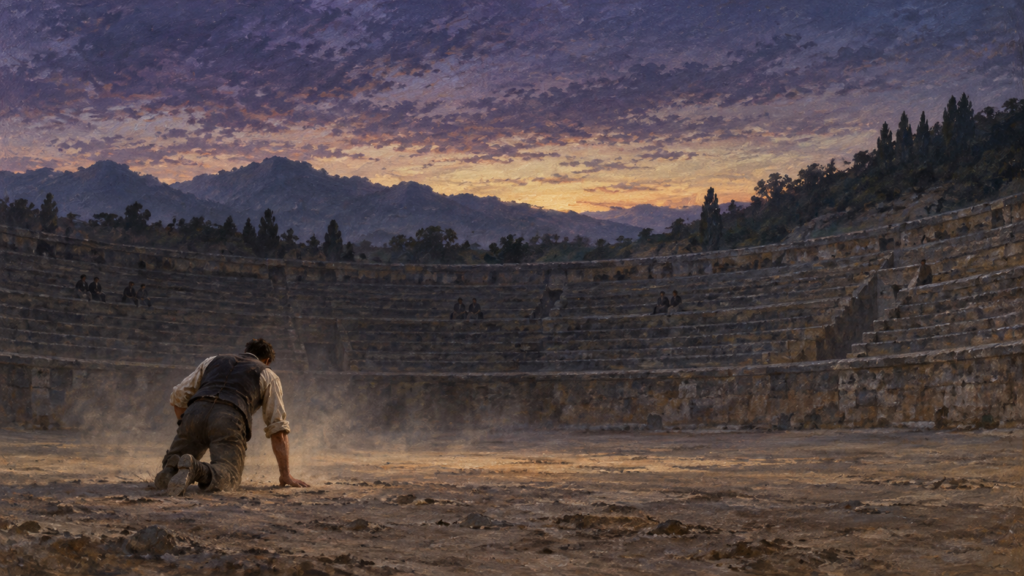
It is not the critic who counts; not the man who points out how the strong man stumbles, or where the doer of deeds could have done them better. The credit belongs to the man who is actually in the arena, whose face is marred by dust and sweat and blood; who strives valiantly; who errs, and comes short again and again, because there is no effort without error and shortcoming; but who does actually strive to do the deeds; who knows the great enthusiasms, the great devotions; who spends himself in a worthy cause; who at the best knows in the end the triumph of high achievement, and who at the worst, if he fails, at least fails while daring greatly, so that his place shall never be with those cold and timid souls who know neither victory nor defeat. Shame on the man of cultivated taste who permits refinement to develop into a fastidiousness that unfits him for doing the rough work of a workaday world. Among the free peoples who govern themselves there is but a small field of usefulness open for the men of cloistered life who shrink from contact with their fellows. Still less room is there for those who deride or slight what is done by those who actually bear the brunt of the day; nor yet for those others who always profess that they would like to take action, if only the conditions of life were not what they actually are. The man who does nothing cuts the same sordid figure in the pages of history, whether he be cynic, or fop, or voluptuary. There is little use for the being whose tepid soul knows nothing of the great and generous emotion, of the high pride, the stern belief, the lofty enthusiasm, of the men who quell the storm and ride the thunder. Well for these men if they succeed; well also, though not so well, if they fail, given only that they have nobly ventured, and have put forth all their heart and strength. It is war-worn Hotspur, spent with hard fighting, he of the many errors and the valiant end, over whose memory we love to linger, not over the memory of the young lord who “but for the vile guns would have been a soldier.”